


In general, 7-hydroxymitragynine (7-OH) stays in your system for roughly several days.
Its active effects are shorter, but trace amounts can linger depending on dose, frequency of use, metabolism, body fat, liver function, and whether other substances are taken at the same time. Because 7-OH products are often concentrated and vary in strength, how long they stay in your system can differ significantly from person to person.
In this article, you’ll learn how long 7-OH remains detectable, how the body processes and eliminates it, and how detection may differ in urine, blood, or saliva testing. We’ll also discuss the factors that influence how long it remains detectable and what treatment options exist for those struggling with kratom dependence.
What Is 7-OH Kratom?
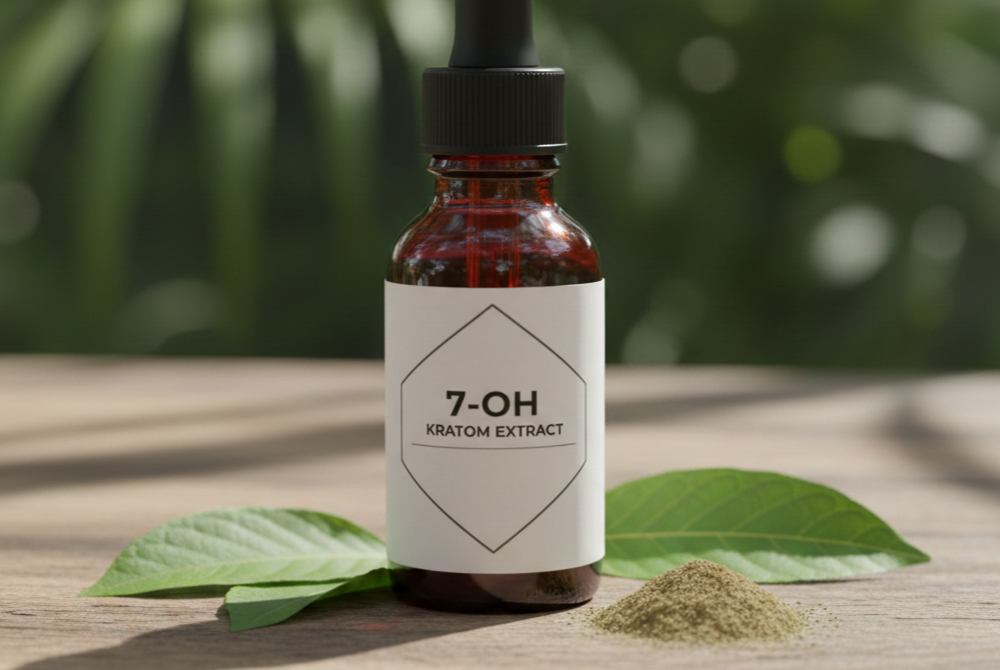
7-hydroxymitragynine, commonly known as 7-OH, is one of the most potent alkaloids found in kratom. While it exists in much smaller quantities than mitragynine (the primary alkaloid in kratom), its effects on the body are far more intense.
The growing popularity of concentrated 7-OH products has raised significant concerns among healthcare professionals. Many commercial kratom products now contain artificially elevated levels of 7-OH, often much higher than naturally occurring concentrations. This variability makes it difficult for users to predict effects or manage their intake safely.
Because 7-OH activates opioid receptors so intensely, it carries a substantial risk for dependence. Regular use can alter the brain’s endorphin-receptor balance, leading to tolerance, physical dependence, and withdrawal symptoms upon cessation.
7-OH vs. Kratom
The key difference between 7-OH kratom and regular kratom lies in potency and risk profile. Standard kratom products primarily contain mitragynine, which produces milder effects at typical doses; in contrast, 7-OH products deliver a much stronger experience.
When comparing 7-OH kratom and kratom in its natural form, 7-OH binds approximately five times more tightly to opioid receptors. Additionally, the body converts some mitragynine into 7-OH during metabolism, meaning even regular kratom use contributes to 7-OH exposure.
Concentrated 7-OH products pose heightened safety concerns due to their potent and rapidly acting effects. Users seeking stronger effects often don’t realize they’re significantly increasing their risk of developing opioid addiction and even kratom overdose.
How Is 7-OH Kratom Metabolized?
Like most substances, 7-OH kratom is metabolized primarily in the liver before being eliminated from the body.
Unlike traditional kratom, which must first be metabolized into 7-hydroxymitragynine, consuming 7-OH introduces the active compound directly into the bloodstream. It is then processed in the liver via cytochrome P450 enzymes, including CYP3A4 and CYP2D6.
Interestingly, a portion of mitragynine (the primary kratom alkaloid) is converted into 7-OH during liver metabolism. This conversion helps explain why 7-OH kratom effects can be more powerful than expected based solely on its natural content in the plant material.
The metabolites are then excreted primarily through urine, with smaller amounts excreted in feces. The efficiency of this elimination process varies significantly between individuals based on liver health, genetics, and other factors.
7-OH Kratom Half-Life
Estimates from preclinical studies suggest a half-life of about 24 hours, though actual clearance in humans may vary widely depending on dose, frequency, metabolism, and overall health.
Based on this half-life, it typically takes 5-6 days for 7-OH to be completely eliminated from your system. However, metabolites may remain detectable in certain tissues and bodily fluids for considerably longer.
This relatively long half-life contributes to 7-OH kratom’s potential for accumulation with repeated use. When doses are taken more frequently than the body can eliminate them, concentrations build up, increasing both effects and the risk of dependence.
How Long Does 7-OH Kratom Stay in Your System?
How long 7-OH kratom stays in your system depends heavily on the type of test being used, as different bodily fluids and tissues retain traces of 7-OH for varying periods of time.
It’s important to note that standard drug panels typically don’t screen for kratom alkaloids. However, specialized testing can detect these compounds when clinically indicated.
Blood
Blood tests offer the shortest detection window for 7-OH kratom, as the substance typically remains detectable in blood for approximately 24-48 hours after the last dose.
This type of testing is most useful for identifying recent use or in emergency medical situations. However, because 7-OH clears from the bloodstream relatively quickly, this method isn’t ideal for detecting patterns of long-term use.
Peak blood concentrations usually occur within 1-2 hours of oral consumption; after this point, levels decline as the liver processes the alkaloids and the body begins elimination.
Hair
Hair follicle testing provides the longest detection window for any substance, including kratom alkaloids. 7-OH can potentially be detected in hair for up to 90 days or longer after use.
As hair grows, it incorporates traces of substances circulating in the bloodstream, which creates a timeline of drug exposure that extends back several months. It grows approximately half an inch per month, so a 1.5-inch sample can theoretically reveal a 90-day history.
However, hair testing for kratom remains uncommon and is primarily used in specialized research or forensic contexts rather than standard employment screenings.
Urine
Urine testing represents the most practical method for detecting kratom use, and 7-OH and its metabolites can remain detectable in urine for approximately 5-7 days after the last dose.
For heavy, long-term users, this window may extend even further. Accumulated metabolites stored in fatty tissues can continue to be released into urine for an extended period, potentially pushing detection times to 9 days or more.
A kratom drug test specifically designed to detect mitragynine and 7-OH metabolites would need to be ordered, as these compounds don’t appear on standard drug panels.
Saliva
Saliva testing for kratom is less common but can detect recent use. The detection window is relatively short, typically 12-24 hours after consumption.
Oral fluid testing may be useful for identifying very recent kratom use, such as in roadside testing scenarios or workplace incidents. However, the limited detection window makes it less useful for identifying regular users.
Currently, saliva-based kratom testing is not widely available and remains primarily a research tool rather than a standard screening method.
Disclaimer: Specific timelines for 7-OH may differ and are not well-studied in humans.
5 Factors That Affect How Long 7-OH Kratom Stays in Your System
Multiple variables influence how quickly your body processes and eliminates 7-OH kratom. Knowing what these are can help you estimate your personal detection timeline and recognize 7-OH risks and dangers, as well as factors for dependence.
Dosage and Frequency of Use
Higher doses and more frequent use lead to longer detection times. When you consume large amounts of 7-OH kratom, your body simply has more substance to process and eliminate. Chronic users accumulate 7-OH and its metabolites in their tissues over time; this accumulation means the body must work longer to clear everything out after stopping use.
Someone who takes kratom once will clear it much faster than a daily user who has been consuming the substance for months or years. The difference can be substantial, potentially adding several days to the detection window.
Potency and Product Formulation
The strength of the 7-OH kratom product significantly impacts how long it stays in your system. Concentrated extracts and enhanced products deliver higher alkaloid loads that require more time to metabolize.
Product formulations vary wildly in the unregulated kratom market. The 7-OH kratom effects from highly concentrated products are more intense, and, subsequently, the metabolic burden on your liver is correspondingly greater. This extended processing time translates directly to longer detection windows.
Liver Function
Your liver handles the primary responsibility for metabolizing kratom alkaloids, so individuals with compromised liver function will process 7-OH more slowly than those with healthy livers.
Conditions such as hepatitis, fatty liver disease, or cirrhosis can significantly impair metabolic capacity. Plus, certain medications that affect liver enzymes can also slow kratom metabolism.
Age-related decline in liver function means older adults may retain 7-OH longer than younger users. This factor becomes particularly important when considering dosing and detection timelines.
Length of Use
The duration of your kratom use history affects elimination time; long-term users develop higher tissue concentrations that persist even after stopping. With extended use, 7-OH accumulates in fatty tissues throughout the body; these tissues slowly release the substance back into circulation, prolonging the overall elimination process.
Someone who has used kratom for years may test positive for considerably longer than someone with only weeks of use history, even if their recent consumption patterns are identical.
Overall Health Conditions
General health status influences how efficiently your body processes any substance, including 7-OH kratom. Namely, metabolic rate, kidney function, hydration levels, and body composition all play roles.
Furthermore, individuals with higher body fat percentages may retain 7-OH longer because the substance and its metabolites can accumulate in adipose tissue. Conversely, those with faster metabolisms may clear kratom more quickly.
Finally, kidney health also matters because urine is the primary elimination route; impaired kidney function can slow the excretion of metabolites, extending detection windows.
7-OH Kratom Testing and Detectability

Standard workplace and medical drug panels do not typically screen for kratom alkaloids. The most common tests (5-panel and 10-panel) focus on substances like opioids, amphetamines, benzodiazepines, cannabis, and cocaine.
However, specialized tests capable of detecting mitragynine and 7-OH do exist. These are becoming more common as kratom use increases and employers or medical providers seek more comprehensive screening.
A kratom drug test requires specific immunoassay or mass spectrometry methods designed to identify kratom alkaloids. These tests are more expensive and less widely available than standard panels.
For individuals in treatment programs or facing legal requirements, kratom testing may be specifically requested. It’s also important to disclose kratom use to healthcare providers, as it can affect treatment planning and medication interactions.
Employment implications vary by industry and employer. While kratom remains legal in most states, some employers have begun including it in their testing protocols, particularly in safety-sensitive positions.
Kratom 7-OH Withdrawal and Recovery
When regular 7-OH kratom users stop taking the substance, withdrawal symptoms typically emerge within 12-48 hours of the last dose. The 7-OH withdrawal duration varies based on usage patterns but generally follows a predictable timeline.
Physical withdrawal symptoms commonly include:
- Muscle aches and joint pain
- Nausea and vomiting
- Diarrhea
- Excessive sweating
- Runny nose and watery eyes
- Tremors
- Fatigue
Psychological symptoms often accompany the physical discomfort:
- Anxiety and restlessness
- Irritability and mood swings
- Depression
- Intense cravings
- Insomnia and sleep disturbances
Acute withdrawal symptoms typically peak within the first 2-3 days and begin subsiding after about a week. However, some individuals experience post-acute withdrawal syndrome (PAWS), where symptoms persist for weeks or even months.
PAWS symptoms tend to be more psychological in nature, including lingering anxiety, depression, and cravings. This extended recovery phase underscores why proper treatment is essential for achieving lasting freedom from kratom dependence.
Treatment and Support Options for Kratom Dependence
Simply detoxing from kratom does not address the underlying neurobiological changes that drive dependence. Traditional detox approaches may help someone get through acute withdrawal, but they leave the endorphin-receptor system imbalanced.
This imbalance is why relapse rates remain high with detox-only approaches. Without addressing the root cause, cravings persist, and the risk of returning to kratom use remains significant.
Accelerated Neuro-Regulation (ANR) offers a different approach by targeting the neurobiological mechanisms underlying opioid dependence. This treatment works to re-regulate the endorphin-receptor system rather than simply managing symptoms.
By restoring balance to the brain’s natural opioid system, ANR addresses why people feel compelled to continue using substances like 7-OH kratom.
Key Takeaways
Learning how long 7-OH kratom stays in your system involves recognizing multiple factors that influence metabolism and elimination. The substance’s 24-hour half-life means complete clearance typically takes 5-6 days, though detection windows vary by test type.
Blood tests detect 7-OH for 24-48 hours, urine tests for 5-9 days, and hair tests potentially for 90 days or longer. Individual factors, including dosage, frequency of use, liver function, and overall health, significantly impact these timelines.
Most importantly, 7-OH kratom carries substantial dependence risk due to its potent opioid receptor activity. Those struggling with kratom dependence should seek opioid dependence treatment, such as ANR, that addresses the neurobiological roots of the problem rather than relying on detox alone.
How Long Does 7-OH Kratom Stay in Your System FAQ
#1. What are the effects of 7-OH kratom?
7-OH kratom produces potent opioid-like effects, including pain relief, euphoria, sedation, and relaxation. At higher doses, it causes significant central nervous system (CNS) depression. Regular use leads to tolerance, physical dependence, and withdrawal symptoms upon cessation.
#2. Is 7-OH kratom detected by drug tests?
Standard drug panels do not detect 7-OH kratom; however, specialized tests designed to identify kratom alkaloids do exist and are becoming more common. These tests specifically screen for mitragynine and 7-hydroxymitragynine metabolites.
#3. Does kratom leave the body faster than prescription opioids?
Kratom’s elimination is generally shorter than that of some long-acting prescription opioids, but actual rates vary widely based on individual metabolism, dose, and frequency.