


Comparing buprenorphine vs. oxycodone means looking at two fundamentally different opioid medications with distinct purposes and risk profiles. While both interact with opioid receptors in your central nervous system (CNS), each serves different medical needs and carries varying levels of risk for opioid dependence and addiction.
This article breaks down the essential differences between these medications, their uses, risks, and what you need to know if you or someone you care about is prescribed either of these medications.
What Is Buprenorphine, and What Is It Used For?
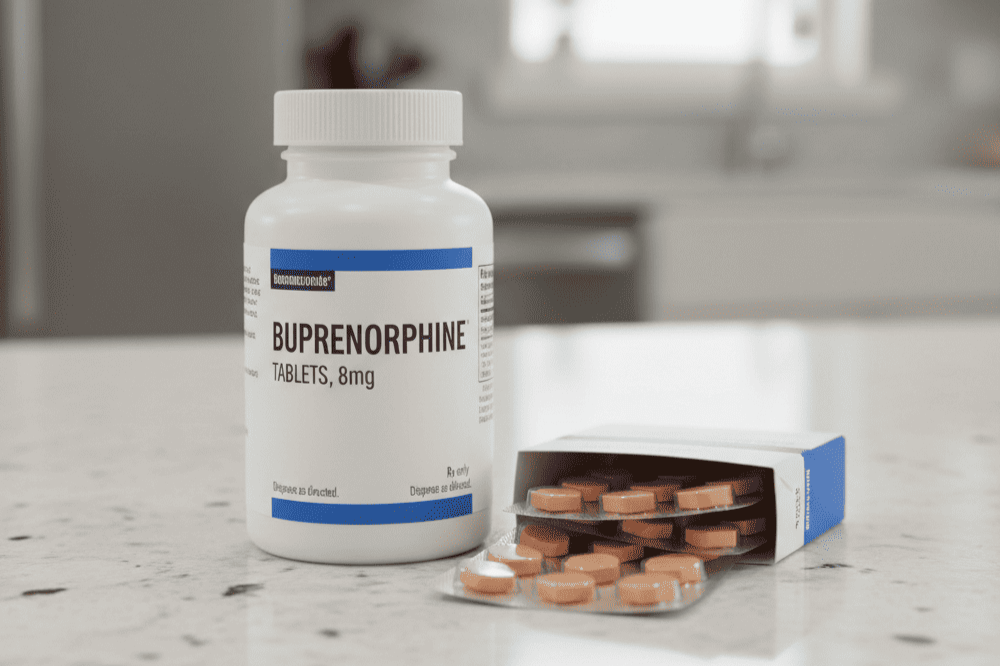
Buprenorphine is a partial opioid agonist, which means it activates opioid receptors but produces a weaker effect than full agonists. It’s primarily used for two purposes: managing chronic pain and treating opioid use disorder as part of medication-assisted treatment (MAT).
What makes buprenorphine unique is its “ceiling effect.” After reaching a certain dose, taking more doesn’t increase the euphoric effects, which reduces its potential for misuse. Healthcare providers often prescribe it as Subutex (buprenorphine alone) or Suboxone (combined with naloxone to further discourage misuse).
The medication works by binding tightly to opioid receptors, blocking other opioids from attaching while providing enough activation to prevent withdrawal symptoms. This makes it particularly useful for people transitioning away from more potent or illicit opioids.
For chronic pain management, buprenorphine offers an alternative for patients who haven’t responded well to other treatments or need round-the-clock pain relief. It’s available in various forms, including sublingual tablets, films, and long-acting patches.
Side Effects of Buprenorphine
Common buprenorphine side effects include:
- Headache and dizziness
- Nausea and vomiting
- Constipation
- Sweating
- Sleep problems
- Mouth numbness or redness
- Withdrawal symptoms if stopped suddenly
- Respiratory depression (less common than with full agonists)
What Is Oxycodone, and How Does It Affect Your Body?
Oxycodone is a full opioid agonist, meaning it fully activates opioid receptors in the central nervous system. It’s a semi-synthetic opioid derived from thebaine, primarily prescribed for moderate to severe pain management.
You might know oxycodone by brand names like OxyContin (extended-release) or Percocet (combined with acetaminophen). Unlike buprenorphine, it doesn’t have a ceiling effect; higher doses produce stronger effects, which increases both its effectiveness for severe pain and its potential for misuse and overdose.
When oxycodone enters your system, it quickly crosses the blood-brain barrier and floods opioid receptors, particularly the mu-receptors responsible for pain relief and euphoria. This rapid, powerful action makes it highly effective for acute pain, post-surgical pain, and cancer-related pain. However, it also means that your body can develop tolerance relatively quickly, requiring higher doses to achieve the same level of pain relief.
The risk of developing oxycodone dependence and addiction is significant, even when taking it exactly as prescribed. Your body adapts to its presence, and stopping suddenly can trigger uncomfortable withdrawal symptoms.
Side Effects of Oxycodone
Some common side effects of using oxycodone include:
- Sleepiness and sedation
- Constipation (often severe)
- Nausea and vomiting
- Dizziness and confusion
- Dry mouth
- Itching
- Respiratory depression
- Risk of overdose at higher doses
- Physical dependence with regular use
Buprenorphine vs. Oxycodone for Pain Management: Key Differences
Knowing the differences between buprenorphine and oxycodone helps patients and healthcare providers make smart decisions about pain management and opioid dependence treatment.
While both medications are opioids, their properties, uses, and risks vary significantly. Let’s examine the key distinctions that set them apart:
#1. Strength and Use
Oxycodone primarily serves as a powerful painkiller for acute, severe pain, such as for post-surgery recovery, serious injuries, or cancer pain. It’s the go-to option when other pain medications aren’t effective. Doctors prescribe it for short-term use whenever possible, though some chronic pain patients may use extended-release formulations for ongoing management.
Meanwhile, buprenorphine pulls double duty. Beyond treating chronic pain, it’s also used in opioid dependence treatment; MAT programs employ it to help people transition off short-acting or illicit opioids while avoiding the brutal withdrawal symptoms.
#2. Mechanism of Action
Buprenorphine binds tightly to µ-opioid receptors in the central nervous system (CNS) but only partially activates them, which allows it to reduce withdrawal symptoms and cravings while limiting opioid effects. Oxycodone, by contrast, is a full opioid agonist that fully activates these receptors, producing stronger analgesia but also a higher risk of side effects, tolerance, and dependence.
#3. Cost and Availability
Generic versions of oxycodone are widely available and relatively inexpensive for short-term use. Most pharmacies stock it, and insurance typically covers it if it’s used for acute pain, and extended-release formulations cost more but are still generally accessible.
When it comes to buprenorphine, particularly for addiction treatment, it often requires special prescriber certifications and may have more restricted availability. The cost varies widely depending on formulation and intended use.
Additionally, insurance coverage for addiction treatment with buprenorphine has improved, but can still be inconsistent. Some patients find accessing buprenorphine for chronic pain management challenging due to its association with addiction treatment.
#4. Overdose Risk
The risk of oxycodone overdose is significant and increases with dose. There’s no upper limit to its respiratory depression effects, which makes the overdose potentially fatal. Mixing oxycodone with alcohol or benzodiazepines dramatically increases this risk.
Meanwhile, buprenorphine’s ceiling effect extends to respiratory depression, making fatal overdose less likely when used alone. However, combining it with other CNS depressants can still be dangerous.
Risks and Limitations of Buprenorphine and Oxycodone

Both oxycodone and buprenorphine carry inherent risks that patients and providers need to consider carefully. These include:
- Physical dependence, which can develop with prolonged oxycodone use, while buprenorphine is prescribed in the context of an existing opioid dependence and often sustains physical dependence as part of treatment.
- Cognitive impairment that can affect driving and work performance, particularly during initial use or dose adjustments
- Hormonal changes, which may occur with long-term use and affect the endocrine system, testosterone levels, and fertility
- Precipitated withdrawal, which can occur if buprenorphine is started too soon after using full agonist opioids
- Drug interactions with benzodiazepines, alcohol, and other CNS depressants increase overdose risk
- Tolerance, which requires dose escalation over time, particularly with oxycodone
- Withdrawal symptoms that make discontinuation challenging without proper medical support
Long-term opioid use of either medication can lead to hyperalgesia, which is a paradoxical increase in pain sensitivity. Some patients find themselves needing higher doses not just due to tolerance, but because their pain actually worsens with continued use.
Misconceptions About Buprenorphine and Oxycodone
There are several myths about using buprenorphine and oxycodone that might prevent people from getting appropriate treatment or lead to dangerous misunderstandings. Let’s clear up some of them:
“Oxycodone is always dangerous.”
When used appropriately for acute pain under medical supervision, oxycodone can be safe and effective. Problems arise with long-term use, dose escalation, or use outside medical guidelines. Many post-surgical patients benefit tremendously from short-term oxycodone without developing addiction issues.
“You can’t overdose on buprenorphine.”
While the risk is lower, overdose is still possible, especially when the medication is combined with other substances or in opioid-naive individuals. The ceiling effect protects against respiratory depression to a certain extent, but it does not provide absolute immunity. Plus, mixing buprenorphine with benzodiazepines or alcohol might lead to fatal overdoses.
“Switching between these medications is straightforward.”
Transitioning from oxycodone to buprenorphine requires careful timing and medical supervision. Starting buprenorphine too soon after oxycodone can trigger precipitated withdrawal, an intense, immediate onset of withdrawal symptoms that can be medically dangerous. As a result, most providers use specific protocols and scoring systems to determine the appropriate transition time.
“Higher doses always mean better pain relief.”
This misconception leads to unnecessary dose escalation. With buprenorphine, the ceiling effect means more isn’t always better; with oxycodone, higher doses increase side effects and risks faster than they improve pain control. Sometimes switching approaches or adding non-opioid treatments works better than simply increasing the dose.
“These medications work the same for everyone.”
Genetic variations affect how people metabolize opioids. Individual tolerance, age, liver and kidney function, and interactions with other medications all significantly influence how these drugs are processed, how long they remain active, and how strong their effects are, even at standard doses.
“Once you start, you can never stop.”
Discontinuation is possible, but the path differs significantly between medications. Oxycodone use often leads to escalating tolerance and physical dependence, making cessation increasingly difficult over time. Buprenorphine, while effective for stabilization, binds tightly to opioid receptors and is notoriously challenging to discontinue, even with slow, medically supervised tapers. Many patients remain physically dependent on buprenorphine for years or decades, not because tapering is impossible, but because the withdrawal process can be prolonged and difficult to tolerate.
When to Ask for Help
You should ask for help if you’re struggling with opioid medications or finding it hard to manage your prescribed opioids. Reaching out for support isn’t a sign of weakness; it’s a smart health decision, and it could even save your life.
Contact your healthcare provider if you’re experiencing tolerance, withdrawal symptoms between doses, or concerns about dependence.
Key Takeaways
Comparing buprenorphine vs oxycodone reveals two medications with different strengths, risks, and appropriate uses. Oxycodone excels at managing severe acute pain but carries many risks. Meanwhile, buprenorphine offers unique benefits for both chronic pain and addiction treatment, with a better safety profile but its own long-term set of challenges.
The right choice depends on individual medical needs, risk factors, and treatment goals. Both medications require careful monitoring and respect for their potential risks, which you must have in mind if you are starting opioid therapy.