


The kratom vs. 7-OH kratom difference lies in the fact that regular kratom is typically used for mild stimulation, mood support, or pain relief, depending on dose, while 7-OH products are designed to deliver stronger opioid-like effects and faster relief.
This difference matters because 7-OH can come with higher risks, including stronger tolerance, dependence, withdrawal symptoms, sedation, and unpredictable effects due to varying concentrations.
So, in this article, we bring you a comprehensive kratom vs. 7-OH kratom comparison, which shows how these two differ in potency, effects, dosing, and safety concerns.
What Is Kratom?
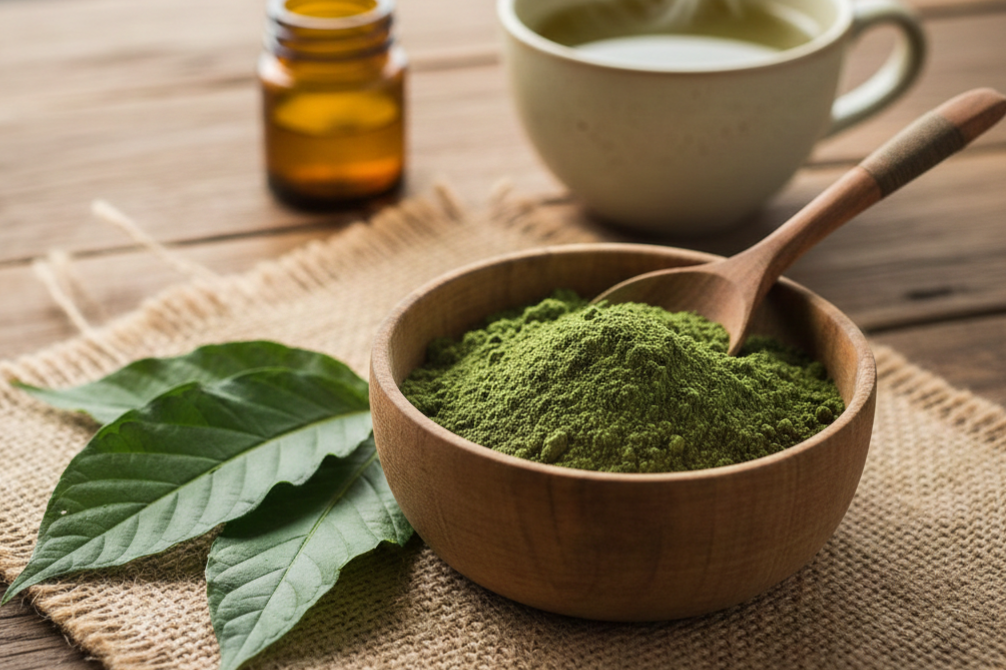
Kratom (Mitragyna speciosa) is a tropical tree native to Southeast Asia, where it has been used for centuries as a traditional remedy. Workers in countries such as Thailand and Malaysia would chew the leaves to combat fatigue, boost energy, and manage pain during long, labor-intensive days.
Today, this substance is consumed in various forms, including powders, capsules, extracts, and teas. You can find it in smoke shops, online retailers, and even some convenience stores across the United States; however, despite its widespread availability, the FDA has not approved kratom for any medical use.
The effects of kratom depend heavily on the dose. At low doses, it acts as a stimulant, producing increased energy, alertness, and sociability. Yet, at higher doses, it shifts to producing sedative and pain-relieving effects similar to opioids.
Common kratom side effects include:
- Nausea
- Constipation
- Drowsiness
- Dizziness, and
- Dry mouth
What’s even more concerning is its potential for dependency. Because this substance interacts with opioid receptors in the brain, regular use can lead to tolerance, physical dependence, and kratom addiction.
What Is 7-OH Kratom?
7-OH kratom, or 7-hydroxymitragynine, is a naturally occurring alkaloid found in kratom leaves. It exists in very small quantities; however, what makes it significant is its extraordinary potency compared to kratom’s primary alkaloid, mitragynine.
The 7-OH kratom effects are considerably stronger and faster-acting than regular kratom. It causes a more intense onset of pain relief, sedation, and euphoria. The duration of effects tends to be shorter, which can lead to more frequent dosing and a higher risk of dependency.
So, is 7-OH kratom stronger than kratom? The answer is: yes. Laboratory and animal studies suggest that 7-OH interacts strongly with mu-opioid receptors, showing agonist activity. In preclinical models, it also produces reward-seeking behaviors, such as self-administration and conditioned place preference, which align with known opioid-like effects.
These preclinical studies imply substantial safety considerations with 7-OH kratom. The higher potency translates to a greater overdose risk. Many commercial products have been found to contain artificially elevated levels of 7-OH, further increasing the danger.
Kratom vs. 7-OH Kratom: What Are the Key Differences?
Knowing what the kratom vs. 7-OH difference in terms of potency and other distinguishing factors is can help you grasp why these substances present different levels of risk. Let’s explore this in more detail:
#1. Kratom vs. 7-OH Potency and Strength
The most significant difference lies in potency. Standard kratom relies primarily on mitragynine for its effects, which is present in much higher concentrations but is considerably weaker. 7-OH kratom has 5-23 times more binding affinity to opioid receptors than mitragynine.
This explains the stronger and more rapid effects of 7-hydroxymitragynine. In real applications, for instance, someone accustomed to regular kratom who switches to a 7-OH product without adjusting their dose could experience serious adverse reactions or overdose.
#2. Kratom vs. 7-OH Onset and Duration of Effects
Regular kratom typically takes 15 to 30 minutes to produce noticeable effects, which can last anywhere from 2 to 5 hours, depending on the dose and form consumed. The experience tends to build gradually and taper off slowly.
Meanwhile, 7-OH kratom works much faster. Users feel effects within minutes, with peak intensity arriving quickly; however, the duration is generally shorter, which encourages redosing and increases the cumulative risk of adverse effects.
#3. Kratom vs. 7-OH Addiction and Dependency Potential
Both substances carry significant opioid addiction potential because they interact with the brain’s opioid receptor system. Regular kratom use can lead to dependency, characterized by tolerance, withdrawal symptoms, and cravings.
7-OH kratom risks for dependency are even higher due to its increased potency. The more powerfully a substance activates opioid receptors, the more rapidly the brain adapts by reducing natural endorphin production and increasing receptor density. This neurochemical shift is what drives physical dependence.
#4. Kratom vs. 7-OH Availability and Regulation
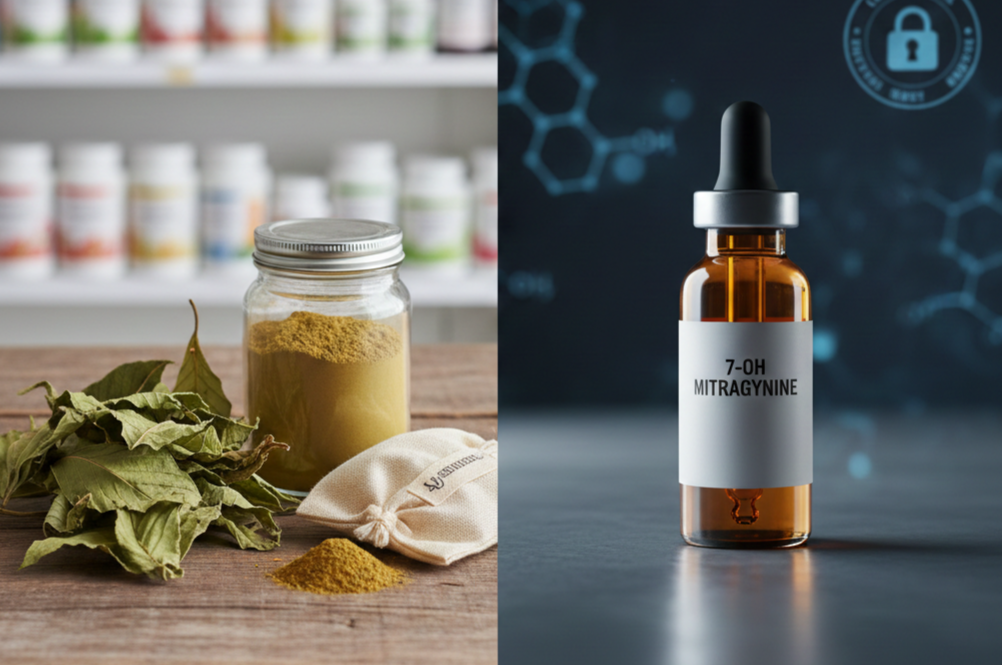
In the United States, standard kratom is not federally scheduled, which is why it remains broadly accessible. However, legality is uneven at the state and local level, with some areas banning it entirely, restricting sales (for example, age limits), or regulating it through public health rules.
Where legal, kratom is easily obtained through online vendors, smoke shops, vape stores, convenience stores, and specialty supplement retailers, which contributes to its widespread use.
By contrast, 7-OH products are a much newer and less transparent segment of the market. Many of these products are sold as concentrated extracts, “shots,” chewables, capsules, tablets, or powders, and are often labeled using vague terms like “enhanced,” “extra strong,” “alkaloid boosted,” or “advanced formula.”
This creates confusion for consumers, because the product may look like kratom while behaving more like a high-potency opioid-like extract in practice.
A major issue is that 7-OH exists in a regulatory blind spot. It may be marketed in ways that intentionally blur categories; some brands position it as an herbal product, others as a supplement, and others avoid clear classification entirely. This makes oversight inconsistent, and it also makes it easier for manufacturers to change formulations without warning, including quietly increasing potency in newer batches.
Side-by-Side Comparison
To make it easier to understand how these substances stack up against each other, here’s a side-by-side comparison of their most important kratom vs. 7-OH kratom characteristics:
| Factor | Regular Kratom | 7-OH Kratom |
| Primary Alkaloid | Mitragynine | 7-Hydroxymitragynine |
| Potency | Moderate | High |
| Onset Time | 15-30 minutes | Minutes |
| Duration | 2-5 hours | Shorter |
| Addiction Risk | Significant | Higher |
| Availability | Widespread | Limited but growing |
| Overdose Risk | Present | Substantially higher |
Kratom and 7-OH Kratom Risks and Safety Concerns
Both kratom and 7-OH kratom present serious health risks that shouldn’t be underestimated simply because one is derived from a plant. Let’s see what these are:
Addiction Potential and Dependency Risk
Prolonged, repeated exposure can lead to physical dependence due to predictable neurochemical adaptations. This has nothing to do with personal history or willpower; the brain’s chemistry changes in response to repeated exposure, decreasing natural endorphin production and creating more opioid receptors.
Once dependent, you’ll experience kratom withdrawal symptoms when you stop using it. These can include muscle aches, insomnia, irritability, anxiety, nausea, and intense cravings. On the other hand, due to higher binding affinity, withdrawal from 7-OH products may be more intense than withdrawal from standard kratom, particularly with frequent or high-dose use.
Overdose and Side Effects
Kratom overdose symptoms include nausea, vomiting, rapid heart rate, hypertension, seizures, and increased heart rate. Additionally, the Centers for Disease Control and Prevention has documented 660 kratom-related poisonings between 2010 and 2015.
Meanwhile, 7-OH kratom carries a substantially elevated overdose risk due to its potency. Even experienced kratom users can misjudge the appropriate 7-OH kratom dosage, leading to life-threatening complications.
Interactions With Other Medications
Both substances can interact dangerously with other drugs, particularly CNS depressants like benzodiazepines, alcohol, and other opioids. Combining any of these with such substances significantly increases the risk of respiratory depression and fatal kratom overdose.
Additionally, kratom’s effects on serotonin and norepinephrine mean it can interact with antidepressants, potentially causing serotonin syndrome—a potentially fatal condition.
Why 7-OH Is Considered Riskier
7-OH is considered riskier because its concentrated nature makes precise dosing extremely difficult. Standard kratom at least offers some margin for error, but with 7-OH, even small miscalculations can have serious consequences.
Furthermore, the rapid onset and shorter duration of 7-OH effects encourage more frequent dosing, which accelerates the development of tolerance and dependence. This creates a dangerous cycle that can quickly spiral into severe opioid addiction and dependence.
Treatment Options for Kratom and 7-OH Kratom Addiction and Dependency
If you or someone you love is struggling with kratom or 7-OH kratom addiction and dependency, professional treatment offers the best path forward. Simply stopping on your own can be extremely difficult due to withdrawal symptoms and carries risks of relapse and overdose.
Accelerated Neuro-Regulation (ANR) is an opioid dependence treatment that addresses the neurobiological root cause of dependency. Standard approaches only manage withdrawal symptoms or substitute one opioid for another; ANR works by re-regulating the endorphin-receptor system to its pre-dependence state.
The treatment is performed in an ICU setting by board-certified anesthesiologists and critical care specialists, ensuring patient safety throughout the procedure. Targeting the underlying chemical imbalance rather than just symptoms, ANR eliminates cravings and withdrawal symptoms, effectively addressing the root of the problem.
Key Takeaways
The comparison of kratom vs. 7-OH kratom reveals that while both substances carry significant risks, 7-OH presents greater dangers due to its potency. Neither substance is approved by the FDA for any medical use, and both can lead to physical dependence with regular use.
If you’re considering kratom for pain management or as a cure to opioid addiction, you should understand that you may be trading one problem for another. The best approach for anyone struggling with opioid dependence is to seek comprehensive opioid dependence treatment, such as ANR, that addresses the underlying causes of the issue and permanently resolves it.
Kratom vs. 7-OH Kratom FAQ
#1. Can 7-OH Kratom be addictive?
Yes, 7-OH kratom is highly addictive due to its potent interaction with opioid receptors. Its strength accelerates the development of tolerance and physical dependence, making it even more addictive than standard kratom.
#2. Is kratom safe for pain management?
Kratom is not considered safe for pain management because the FDA has not approved it for any medical use. It carries significant risks, including dependency, adverse effects, and dangerous interactions with other medications. Therefore, you should explore safer, regulated alternatives with your healthcare provider.
#3. Can you quit kratom without any treatment?
While some people attempt to quit kratom without any treatment, doing so is extremely difficult and often leads to relapse. Withdrawal symptoms can be severe enough to drive continued use, and without addressing the underlying neurochemical imbalance, cravings typically persist.
#4. What are some common symptoms of kratom withdrawal?
Common kratom withdrawal symptoms include muscle aches, insomnia, irritability, anxiety, depression, nausea, vomiting, sweating, and intense cravings. These symptoms typically begin within 12-48 hours after kratom enters your system the last time and can persist for days to weeks.